The Cramps Merch

About

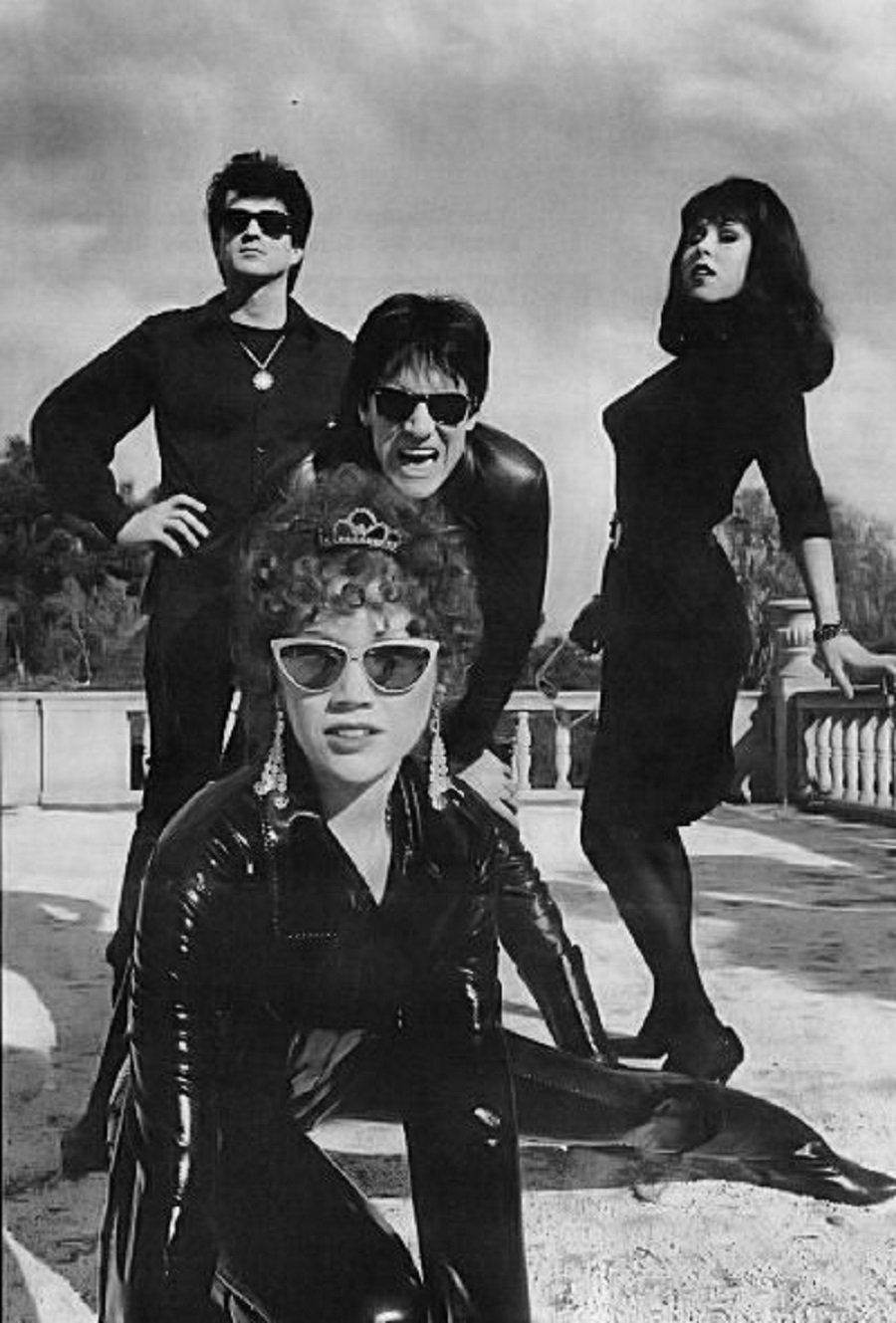
The Cramps were an American rock band formed in 1976 and disbanded in 2009. Their line-up changed all the time during their career but singer Lux Interior and guitarist Poison Ivy were the band’s constant creative force. The Cramps were a band that mixed punk rock, rockabilly, garage rock, surf music and horror-inspired imagery into a sound and style that was all their own. Their theatrical performances, distorted guitars, and dark humor and rebellious attitude influenced generations of alternative musicians. The band’s career was cut short by the death of Lux Interior in 2009, but their recordings and unique visual identity still attract a devoted audience all over the world.

The Cramps 

The Cramps were an American rock band formed in 1976 and active until 2009. Built around singer Lux Interior and guitarist Poison Ivy, the group combined early rockabilly, garage rock, blues, surf music, punk energy, horror films, exploitation cinema, and American pop-culture trash into a distinctive musical world.

Their lineup changed repeatedly, but Lux Interior and Poison Ivy remained the band’s creative and visual center. Together, they developed a sound driven by echo-heavy guitars, primitive rhythms, theatrical vocals, obscure rock-and-roll references, and a deliberate sense of danger. The Cramps became an important part of New York’s early punk scene, although their music never fit comfortably into one category.

The band is frequently associated with psychobilly and gothabilly, yet its influences reached far beyond those labels. The Cramps treated early rock and roll as something wild, strange, sexual, humorous, and threatening. Their music helped introduce new generations to forgotten rockabilly, garage, rhythm-and-blues, and novelty records while inspiring punk, alternative rock, garage revival, gothic music, and underground fashion.

The Meeting of Lux Interior and Poison Ivy

Lux Interior was born Erick Lee Purkhiser, while Poison Ivy was born Kristy Marlana Wallace. The pair met in Sacramento, California, during the early 1970s while attending Sacramento State College. Their shared interests included art, record collecting, horror movies, vintage clothing, low-budget cinema, and unusual American music.

The relationship became both romantic and creative. Lux and Ivy collected obscure records from the 1950s and 1960s, paying attention to music that sounded rougher, stranger, and less polished than mainstream rock. They were attracted to rockabilly performers, surf instrumentals, garage bands, blues musicians, and eccentric novelty records.

After moving to Akron, Ohio, and later New York City, they decided to form a band. The name The Cramps captured the group’s uncomfortable, physical, and slightly disturbing character. By 1976, the project had taken shape, with Lux as the theatrical frontman and Ivy developing the band’s recognizable guitar sound.

Formation and the Early New York Punk Scene

The first important lineup included Lux Interior on vocals, Poison Ivy on guitar, Bryan Gregory on second guitar, and Pam “Ballam” Gregory on drums. Pam Gregory was eventually replaced by Miriam Linna, and Linna was later succeeded by drummer Nick Knox.

Unlike most rock bands, the early Cramps did not use a bass guitarist. The combination of two guitars and stripped-down drums gave their music an unusual amount of empty space. Ivy’s sharp, echoing leads worked against Bryan Gregory’s noisy rhythm guitar, while Lux’s voice moved between rockabilly crooning, screams, growls, laughter, and spoken theatrical exaggeration.

The Cramps became connected to New York venues including CBGB and Max’s Kansas City. They performed alongside punk and new-wave artists but sounded very different from many of their contemporaries. While other groups looked toward modernism, politics, or art-school experimentation, The Cramps searched through older American music and rebuilt it as something new.

Their performances quickly became legendary. Lux climbed on equipment, twisted his body into extreme poses, crawled across stages, removed clothing, and interacted unpredictably with audiences. Poison Ivy remained visually controlled and mysterious, delivering precise guitar lines that held the chaos together.

The Napa State Hospital Concert

One of the most famous early Cramps performances took place at Napa State Hospital in California in 1978. The band played for patients and staff, and the concert was recorded on video.

The footage became widely circulated through underground video trading and later online sharing. It captured the raw atmosphere of the early band and reinforced their reputation as performers willing to appear outside conventional venues.

The show is often treated as a defining document of The Cramps’ early identity: confrontational, humorous, compassionate, unpredictable, and completely committed to performance.

Early Singles and Gravest Hits

In October 1977, Lux Interior, Poison Ivy, Bryan Gregory, and Nick Knox recorded at Ardent Studios in Memphis with producer Alex Chilton, known for his work with Big Star and the Box Tops.

Those sessions produced the band’s first independent singles on Vengeance Records: “Surfin’ Bird” backed with “The Way I Walk,” and “Human Fly” backed with “Domino.” These recordings established the essential Cramps sound—minimal percussion, damaged guitar tones, echo, rockabilly rhythm, and Lux’s exaggerated vocals.

In 1979, the songs were collected with “Lonesome Town” on the five-track Gravest Hits EP. That year, The Cramps also toured Europe as an opening act for The Police. According to the band’s official history, the 1977 Memphis sessions contained considerably more material than listeners initially received.

Songs the Lord Taught Us (1980)

The Cramps released their debut studio album, Songs the Lord Taught Us, in 1980. Produced by Alex Chilton, it remains one of the band’s most influential recordings.

The album included original songs such as “TV Set,” “Garbageman,” “I Was a Teenage Werewolf,” and “Zombie Dance,” alongside transformed versions of older material, including “Fever,” “Strychnine,” and “Tear It Up.”

The Cramps did not perform covers as respectful reproductions. They dismantled songs and rebuilt them inside their own world. Familiar melodies became slower, dirtier, stranger, or more threatening. Ivy’s guitar combined rockabilly precision with distortion and deliberate ugliness, while Lux treated each lyric like a role in a horror film.

Songs the Lord Taught Us introduced the band’s complete aesthetic: monster movies, teenage rebellion, trash culture, sex, death, humor, and forgotten rock and roll. The record is widely regarded as a major influence on psychobilly and garage punk.

Psychedelic Jungle (1981)

Bryan Gregory left The Cramps after the first album and was replaced by Kid Congo Powers, who had previously helped form The Gun Club. With Powers joining Poison Ivy on guitar, the band recorded Psychedelic Jungle, released in 1981.

The album sounded darker and more hypnotic than the debut. Songs such as “Green Fuz,” “Goo Goo Muck,” “The Crusher,” “Caveman,” “Can’t Find My Mind,” and “The Natives Are Restless” combined repetitive rhythms with echoing guitars and feverish vocals.

Psychedelic Jungle demonstrated how effectively The Cramps could transform obscure songs. Their version of “Goo Goo Muck,” originally recorded by Ronnie Cook and the Gaylads, eventually became one of the band’s most widely recognized tracks.

The song received renewed international attention decades later after appearing in the television series Wednesday. This introduced The Cramps to a younger audience and showed how easily their music could move between generations without losing its strange character.

Label Conflict and Smell of Female

Following Psychedelic Jungle, The Cramps became involved in a legal dispute with I.R.S. Records over royalties. The conflict delayed their recording career, limiting their ability to release new studio material for a period.

They returned with Smell of Female, a live mini-album recorded at New York’s Peppermint Lounge and released in 1983. The record includes “Thee Most Exalted Potentate of Love,” “You Got Good Taste,” “Call of the Wighat,” and powerful performances of earlier material.

Smell of Female captured something studio recordings could only partially communicate: the dangerous energy of a Cramps concert. Lux’s vocal performance feels unstable and physical, while Ivy and Kid Congo create distorted guitar textures over Nick Knox’s direct drumming.

Kid Congo Powers left the group after this period, later becoming known for his work with Nick Cave and the Bad Seeds and his own projects.

A Date with Elvis (1986)

The Cramps released A Date with Elvis in 1986. Because the group lacked a permanent bass player during recording, Poison Ivy performed both guitar and bass parts on much of the album.

The record included “How Far Can Too Far Go?,” “The Hot Pearl Snatch,” “Can Your Pussy Do the Dog?,” “Aloha from Hell,” and “Kizmiaz.” It mixed the primitive spirit of their earlier work with clearer production and increasingly confident songwriting.

The album’s title combined rock-and-roll worship with humor and provocation. Elvis Presley represented both the beginning of dangerous youth culture and the transformation of rebellion into commercial mythology—exactly the kind of contradiction The Cramps enjoyed exploring.

A Date with Elvis became especially successful in Europe and strengthened the band’s international following.

Stay Sick! (1990)

Released in 1990, Stay Sick! became one of The Cramps’ best-known albums. The lineup featured Lux Interior, Poison Ivy, drummer Nick Knox, and bassist Candy del Mar.

The record produced memorable tracks including “Bikini Girls with Machine Guns,” “Creature from the Black Leather Lagoon,” “Journey to the Center of a Girl,” “The Creature from the Black Leather Lagoon,” and a version of “Shortnin’ Bread.”

“Bikini Girls with Machine Guns” became one of the band’s signature songs and received significant alternative-music exposure. Its combination of surf imagery, exploitation-film style, heavy rhythm, and outrageous humor made it a perfect summary of the Cramps universe.

Stay Sick! presented the band with a stronger low end and a heavier sound while preserving Ivy’s guitar character and Lux’s theatrical delivery.

Look Mom No Head! (1991)

The Cramps followed with Look Mom No Head! in 1991. It included “Dames, Booze, Chains and Boots,” “Two Headed Sex Change,” “Alligator Stomp,” and “Miniskirt Blues,” which featured Iggy Pop.

The album continued the heavier approach of Stay Sick! while emphasizing the band’s humor and fascination with exaggerated American imagery. Although it did not dramatically alter their style, it demonstrated their ability to maintain a recognizable identity without becoming predictable.

Around this era, the Blues Fix EP also highlighted the blues foundation beneath their punk and rockabilly presentation.

Flamejob (1994)

Released in 1994, Flamejob featured “Ultra Twist,” “Mean Machine,” “Naked Girl Falling Down the Stairs,” and “Swing the Big Eyed Rabbit.”

The record arrived during a period when alternative rock had entered the mainstream, yet The Cramps continued operating according to their own rules. Their sound remained rooted in earlier rock and roll, but its distortion, attitude, and visual style connected naturally with 1990s underground audiences.

Poison Ivy increasingly took responsibility as a producer and arranger. Her control over the band’s sound was essential, ensuring that the guitars remained sharp, spacious, rhythmic, and immediately identifiable.

Big Beat from Badsville (1997)

The Cramps released Big Beat from Badsville through Epitaph Records in 1997. The title referred to a fictional cultural destination representing everything the band loved: dangerous rock and roll, cheap horror movies, leather clothing, exploitation art, and outsider behavior.

Notable tracks include “Cramp Stomp,” “Like a Bad Girl Should,” “It Thing Hard-On,” and “Haulass Hyena.” The album offered a tougher, louder version of their familiar sound.

By this stage, The Cramps had influenced numerous punk, garage, gothic, rockabilly, and alternative artists. However, they never softened their presentation to gain mainstream acceptance.

Fiends of Dope Island (2003)

The band’s final studio album during its active career was Fiends of Dope Island, released in 2003 through their revived Vengeance Records label.

The album includes “Big Black Witchcraft Rock,” “Papa Satan Sang Louie,” “Dr. Fucker M.D.,” “Fissure of Rolando,” and “Dopefiend Boogie.” Its title and songs returned directly to the themes that had defined The Cramps from the beginning: monsters, sex, drugs, strange characters, dangerous music, and cultural trash.

While the record did not attempt to reinvent the band, it demonstrated that Lux and Ivy remained fully committed to their artistic identity. Few groups maintained such a consistent imaginary world across nearly three decades.

The Death of Lux Interior and the End of the Band

Lux Interior died on February 4, 2009, from complications related to an aortic dissection. He was sixty-two.

His death ended The Cramps. Although the group had experienced numerous lineup changes, it could not continue without the central partnership between Lux and Poison Ivy. Their personal relationship, creative chemistry, record collection, shared humor, and knowledge of underground culture formed the foundation of everything the band produced.

Poison Ivy largely withdrew from public performance after Lux’s death. The band’s recordings, videos, photography, and visual influence nevertheless continued to circulate among established fans and new listeners.

Gravest Gravy (2026)

In 2026, previously unreleased recordings from the band’s October 1977 sessions with Alex Chilton were officially issued as Gravest Gravy.

Lux and Ivy had attempted to assemble the project during the late 1980s, but it remained shelved for decades. The original tapes survived in excellent condition and were later restored through a project involving Poison Ivy, Henry Rollins, Ian MacKaye, Don Zientara, Brian Kehew, Pete Lyman, Larry Hardy, and Jimmy Maslon.

The twelve-track archival album includes “TV Set,” “Weekend on Mars,” “Twist & Shout,” “Jungle Hop,” “Can’t Hardly Stand It,” “Hungry,” “The Natives Are Restless,” “Domino,” “Can’t Find My Mind,” “Rockin’ Bones,” “Problem Child,” and “Rocket in My Pocket.”

Released through the revived Vengeance Records, Gravest Gravy allows listeners to hear the early Cramps at a formative moment before their debut album. It also launched a new archival chapter managed by The Cramps Inc., which plans to preserve and reissue recordings from original source tapes.

Studio and Archival Discography

The Cramps’ main studio and archival albums are:

  1. Songs the Lord Taught Us — 1980
  2. Psychedelic Jungle — 1981
  3. A Date with Elvis — 1986
  4. Stay Sick! — 1990
  5. Look Mom No Head! — 1991
  6. Flamejob — 1994
  7. Big Beat from Badsville — 1997
  8. Fiends of Dope Island — 2003
  9. Gravest Gravy — 2026 archival album recorded in 1977

Important live albums, EPs, and compilations include:

  • Gravest Hits — 1979
  • Smell of Female — 1983
  • …Off the Bone — 1983
  • Bad Music for Bad People — 1984
  • RockinnReelininAucklandNewZealandXXX — 1987
  • Blues Fix — 1992
  • How to Make a Monster — 2004

Release dates and the broader catalogue are documented in

Musical Style

The Cramps are regularly described as punk rock, garage punk, rockabilly, psychobilly, and gothabilly. However, Lux and Ivy generally presented their work as rock and roll rather than accepting narrow genre labels.

Their sound was built from simple but carefully selected elements:

  • Poison Ivy’s tremolo-heavy, echoing guitar
  • Primitive drums inspired by early rock and roll
  • Blues and rockabilly rhythms
  • Lux Interior’s theatrical vocals
  • Minimal arrangements and intentional empty space
  • Lyrics influenced by horror, sex, humor, and outsider culture
  • Covers of forgotten records transformed into original Cramps material

Poison Ivy’s guitar playing was crucial. She could sound elegant, threatening, funny, and rhythmically precise within the same song. Her production and arrangement work ensured that the band never became ordinary punk rock or nostalgic rockabilly.

Lux Interior was equally distinctive. His stage performances drew from classic rock-and-roll singers, horror hosts, carnival performers, and uncontrolled physical theater. He treated every concert as a complete transformation rather than a conventional vocal performance.

Influence and Legacy

The Cramps created a world that listeners could enter. Their records, clothing, artwork, stage performances, and interviews all expressed the same obsessive imagination.

They influenced psychobilly bands, garage-rock revivalists, punk performers, gothic musicians, riotous alternative acts, visual artists, fashion designers, and filmmakers. Their importance can be heard in groups that combine retro sounds with modern aggression, as well as artists who understand that a band can create an entire cultural identity.

The Cramps also acted as musical historians. By recording songs connected to artists such as Ronnie Dawson, Hasil Adkins, Charlie Feathers, the Trashmen, the Sonics, Ricky Nelson, and Johnny Burnette, they encouraged fans to explore forgotten corners of American music.

Their influence continues because they never belonged completely to one period. The Cramps looked backward without becoming nostalgic and sounded modern without following trends. They transformed old records, horror imagery, thrift-store fashion, and underground cinema into something personal and new.

The partnership between Lux Interior and Poison Ivy remains one of rock music’s most distinctive creative relationships. Their work was funny without becoming meaningless, theatrical without losing musical power, and primitive without being careless.

The Cramps ended in 2009, but their strange version of rock and roll remains alive. Through classic albums, live footage, reissues, archival projects such as Gravest Gravy, and generations of devoted fans, their message continues to be clear: stay sick, turn blue, and never become ordinary.

Shopping cart

0
image/svg+xml

No products in the cart.

Continue Shopping